
Cracking the TikTok Algorithm: Video-to-Sale Conversion Rates for Supplement Creators
· 15 min read · By Rocktomic Labs Team
TikTok Shop Supplement Conversion Rates (2026 Video Data)
Native TikTok Shop converts shopping sessions at roughly 3.2% to 4.7% platform-wide, while a well-run in-app checkout pushes the number closer to 5% to 8%, per Momentum Works (February 11, 2026). Video is the largest single sales channel on the platform, driving about 50% of US TikTok Shop GMV in 2025, according to Dashboardly (June 19, 2026). For supplement creators, the winning structure is shoppable video plus zero-inventory fulfillment, which is exactly what Rocktomic’s dropship model delivers: every converted view becomes a shipped order, with no pallet of stock sitting unsold and no inventory risk taken upfront on any single unit.
Pick any product, set your monthly volume, and see your real per-unit and monthly profit on every plan – fulfillment, card processing, and membership all included.
What is a TikTok Shop supplement conversion rate?
A TikTok Shop supplement conversion rate measures the share of shoppers who complete an order after interacting with a product on the platform. It’s measured at the session level, which tracks a visitor to purchase, or at the video level, which tracks views to orders.
Supplements complicate that simple math. They convert as a considered purchase, not an impulse buy. Shoppers research ingredients, compare brands, and read reviews before they pay.
So creators should track click-to-order per video and 60-day repeat purchase, not raw view counts. High views with a low click-to-order rate mean the content builds awareness, not purchase intent.
That definition anchors every number later in this article.
How Large Is the TikTok Shop Opportunity for Supplement Brands?
TikTok Shop is no longer experimental. It is a measured sales channel with published year-over-year numbers that sellers can plan around. U.S. TikTok Shop GMV grew from $9B in 2024 to $15.1B in 2025, up 68%, according to Momentum Works (February 11, 2026).
That growth is still accelerating. eMarketer projects U.S. TikTok Shop GMV to reach $23.41B in 2026, another 48% increase, per eMarketer (January 7, 2026). The channel also keeps taking share of the broader U.S. social commerce market, which eMarketer sized at $87.02B in 2025 and $100.99B in 2026. TikTok Shop’s slice moves from 18.2% to a projected 24.1% by 2027, while U.S. TikTok Shop buyers grow from 53.2M to 57.7M, per eMarketer (December 10, 2025).
The Full Market Picture
The first three rows track GMV by year. The last three add context from the wider social commerce market.
| Year | US TikTok Shop GMV | YoY growth | Source |
|---|---|---|---|
| 2024 | $9.0B | Baseline | Momentum Works (February 11, 2026) |
| 2025 | $15.1B | +68% | Momentum Works (February 11, 2026) |
| 2026 (projection) | $23.41B | +48% | eMarketer (January 7, 2026) |
| US social commerce | $87.02B (2025) to $100.99B (2026) | n/a | eMarketer (December 10, 2025; January 7, 2026) |
| TikTok Shop share of US social commerce | 18.2% (2025) to 24.1% (2027) | n/a | eMarketer (December 10, 2025) |
| US TikTok Shop buyers | 53.2M (2025) to 57.7M (2026) | n/a | eMarketer (December 10, 2025) |
Own the SKU, Keep the Relationship
Here is the business angle behind those numbers. Affiliate-only sellers rent attention. They film a video, collect a commission, and the customer stays with someone else’s brand. Creators who own their SKU keep the customer relationship and the margin on the first sale and every repeat order.
That asset compounds while affiliate payouts stop when the video stops performing. The margin stays in your column, and the customer comes back to your brand, not to an algorithm.
For the deeper sales picture, see the 2026 TikTok Shop supplement sales data post.
What Video-to-Sale Conversion Rates Should Supplement Creators Expect?
Any single conversion number is a trap. A shoppable video, a TikTok Shop LIVE, and a paid ad to an external page all convert at different rates; stack them together and you get an average that matches none of your actual traffic. Benchmarks only make sense when you split them by placement and format, and that split changes how you read your own dashboard. It also changes what you plan for: a video aimed at views needs volume, while a LIVE aimed at checkout needs a host and an offer.
Here is the benchmark ladder worth planning against.
| Benchmark | Rate | Source |
|---|---|---|
| Native TikTok Shop platform average | 3.2% to 4.7% | Dashboardly (June 19, 2026); Branvas (June 30, 2026) |
| Good in-app checkout rate | 5% to 8% | TikAdSuite (January 13, 2026) |
| Shoppable video | 2% to 8%, top performers above 10% | JoinBrands (June 3, 2026) |
| TikTok Shop LIVE | 5% to 12% | Dashboardly (June 19, 2026) |
| Paid ads to an external site | 1.5% to 2.5% good, about 1.92% average | Lebesgue (March 9, 2026) |
Creator panels commonly treat roughly 1 organic sale per 5,000 video views as a healthy baseline. Treat that as a working heuristic, not a sourced benchmark; it gives you a quick reality check before you blame the content. If you’re clearing 5,000 views per video and no sale shows up, the number tells you the problem sits somewhere past the view. Use it to set posting volume before you touch paid traffic.
Supplements sit below impulse categories on purpose. Higher price points and trust requirements slow the decision, so a 2% to 5% native range is a realistic planning band. New creators should build their budget around the low end and treat anything above it as upside. When you land under the band, the leak is usually the product page or the offer, not the video reach.
For contrast with another owned-channel play, see the Instagram supplement conversion rate data.
Video, Live, or Shop Tab: Where TikTok Shop Sales Actually Happen?
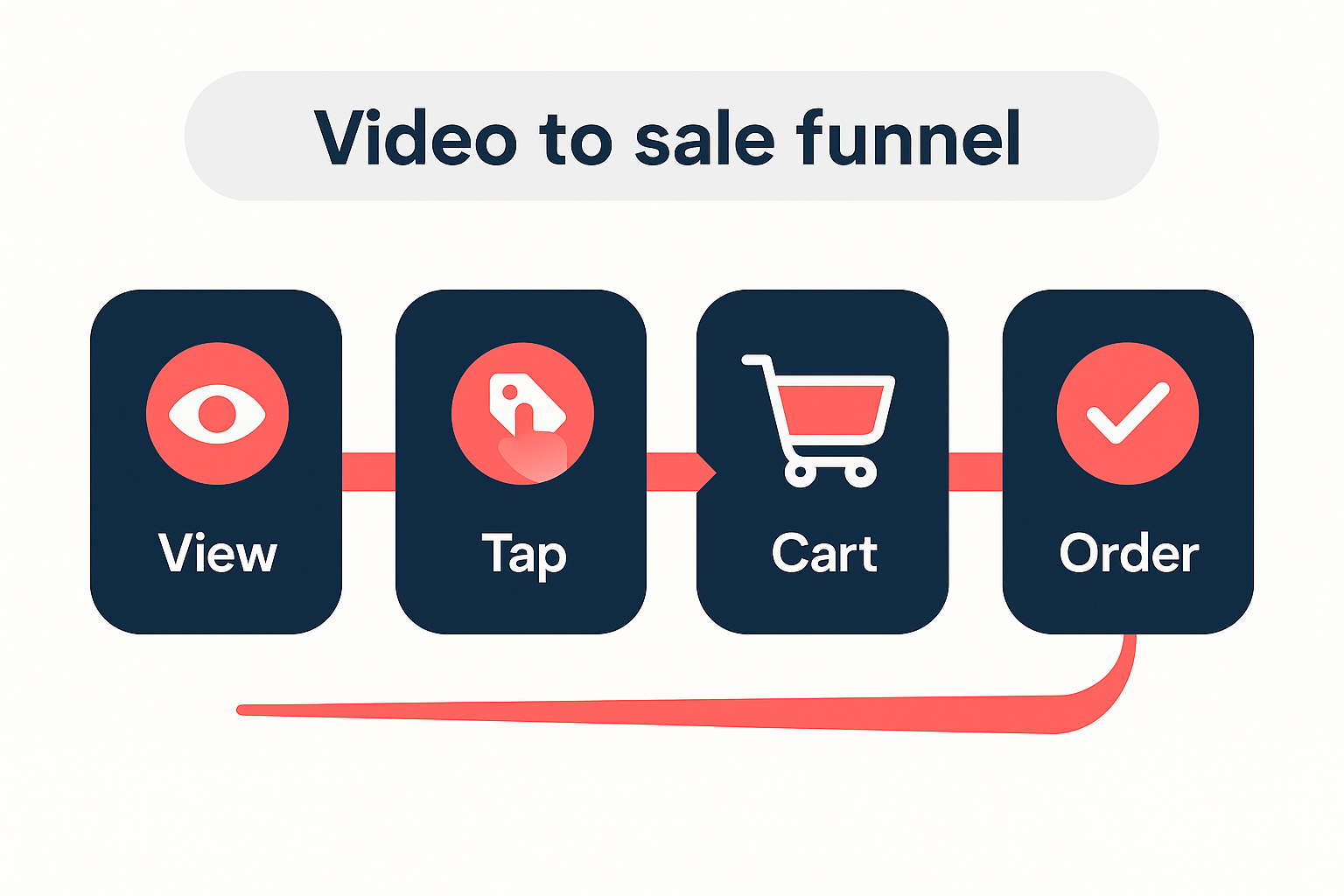
In 2025, video contributed 50% of US TikTok Shop GMV. The Shop tab added 36%. Live accounted for 14%, up from 10% in 2024 (Momentum Works, February 11, 2026).
That split is the map for where your supplement orders come from. Each channel pulls a different buyer, and each one needs a different setup.
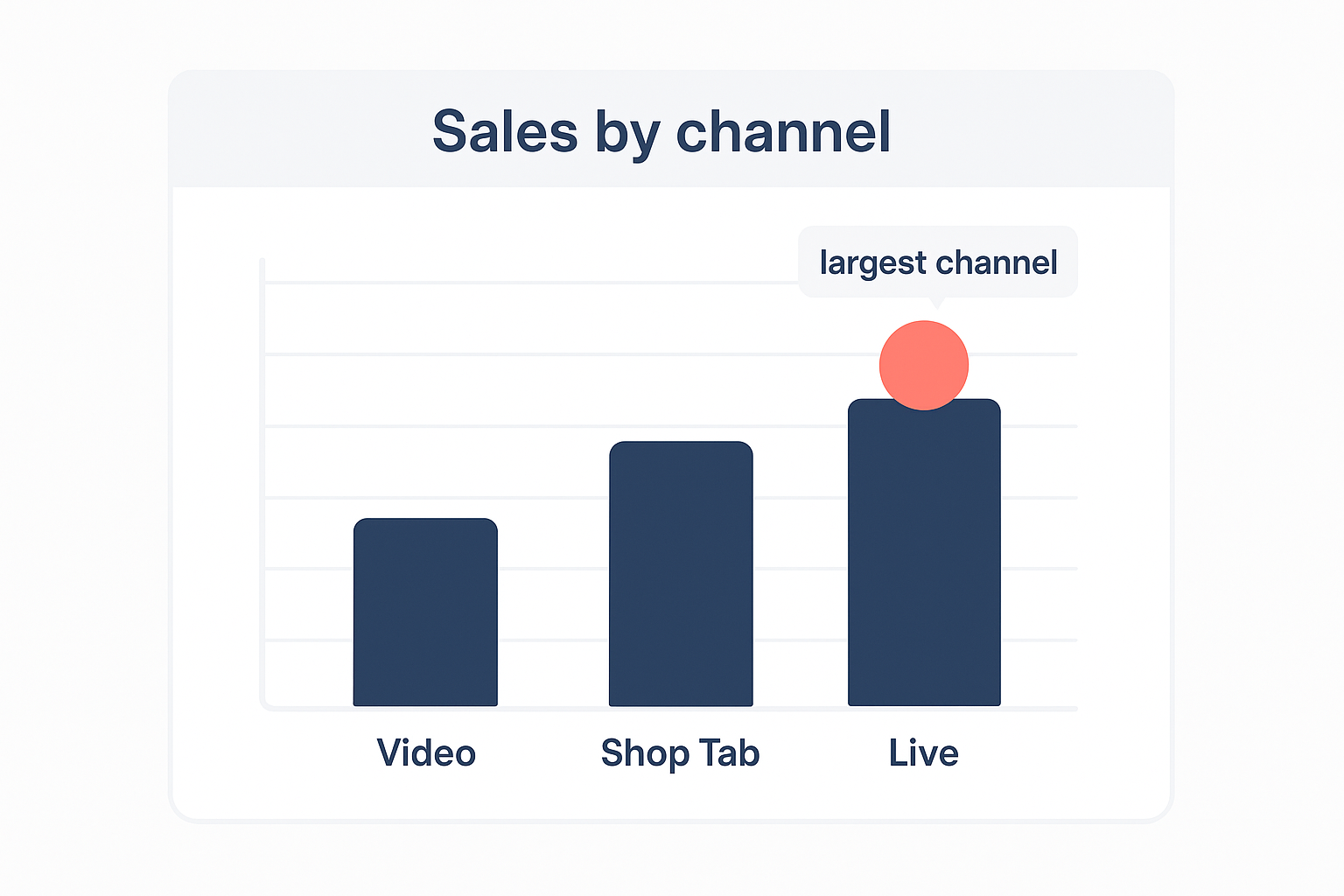
| Channel | Share of 2025 US GMV | What it means for creators |
|---|---|---|
| Video | 50% | Shoppable clips remain the volume engine |
| Shop tab | 36% | Search and browse demand; requires a complete listing |
| Live | 14% and climbing | Highest conversion, 5% to 12% (Dashboardly, June 19, 2026) |
Those shares sit on real dollars. US average order value on TikTok Shop runs roughly $35 to $59 (Branvas, June 30, 2026). Affiliate creator content drives about 42% of US GMV (Momentum Works data via Branvas, June 30, 2026). Affiliates are a lever you can pull without filming a single extra clip.
Run a portfolio, not a single format
Post video for reach. Run Live for conversion. Keep the Shop tab listing polished for browse traffic. A portfolio approach beats any single format, and it fits a zero-inventory model: you film, you go live, you list, and Rocktomic dropships each order as it lands.
The order of operations matters. New brands should lean on video first, because it is the volume engine and it costs nothing but filming time. Add Live once you have an audience that shows up. Let the Shop tab compound in the background as listings collect views and reviews.
Video is the volume engine, but it depends on the algorithm pushing your clip. Live converts at the highest rate of the three, but it costs you time on camera. The Shop tab catches buyers who already know what they want, and it rewards a complete listing with clean imagery and accurate labels. Your branded store connects to TikTok Shop through the store and channel integrations Rocktomic supports, so all three channels feed one product catalog and one fulfillment queue.
What the Algorithm Rewards (and What Turns Views Into Orders)?
TikTok’s discovery engine optimizes for three signals: watch time, completion rate, and now gross merchandise value. Videos that hold attention and attach a product tag outperform pure entertainment, because the tag is an intent signal that plain views do not carry. That is the shift that matters for a supplement brand: views are reach, tagged views are revenue.
The follower-to-conversion curve runs inverse to intuition. Smaller, more targeted audiences routinely convert better than mega-audiences, per MomentIQ’s March 27, 2026 analysis. A 20,000-follower trainer who posts about magnesium daily will sell more units per view than a 2-million-follower generalist. That is why creator rosters skew nano and micro: relevance beats reach when the money comes from the product tag.
Momentum Works quantified the scale on February 11, 2026. TikTok Shop counted 15.4M influencers and 803.5K US stores in 2025. The top of the funnel is crowded; the conversion layer is not. 1,785 creators passed $1M in annual GMV versus 529 the year before, and 9 of the top 10 relied primarily on live. Live is the highest-intent format on the platform, and it rewards the same anatomy as a short selling video.
The Selling Video Anatomy
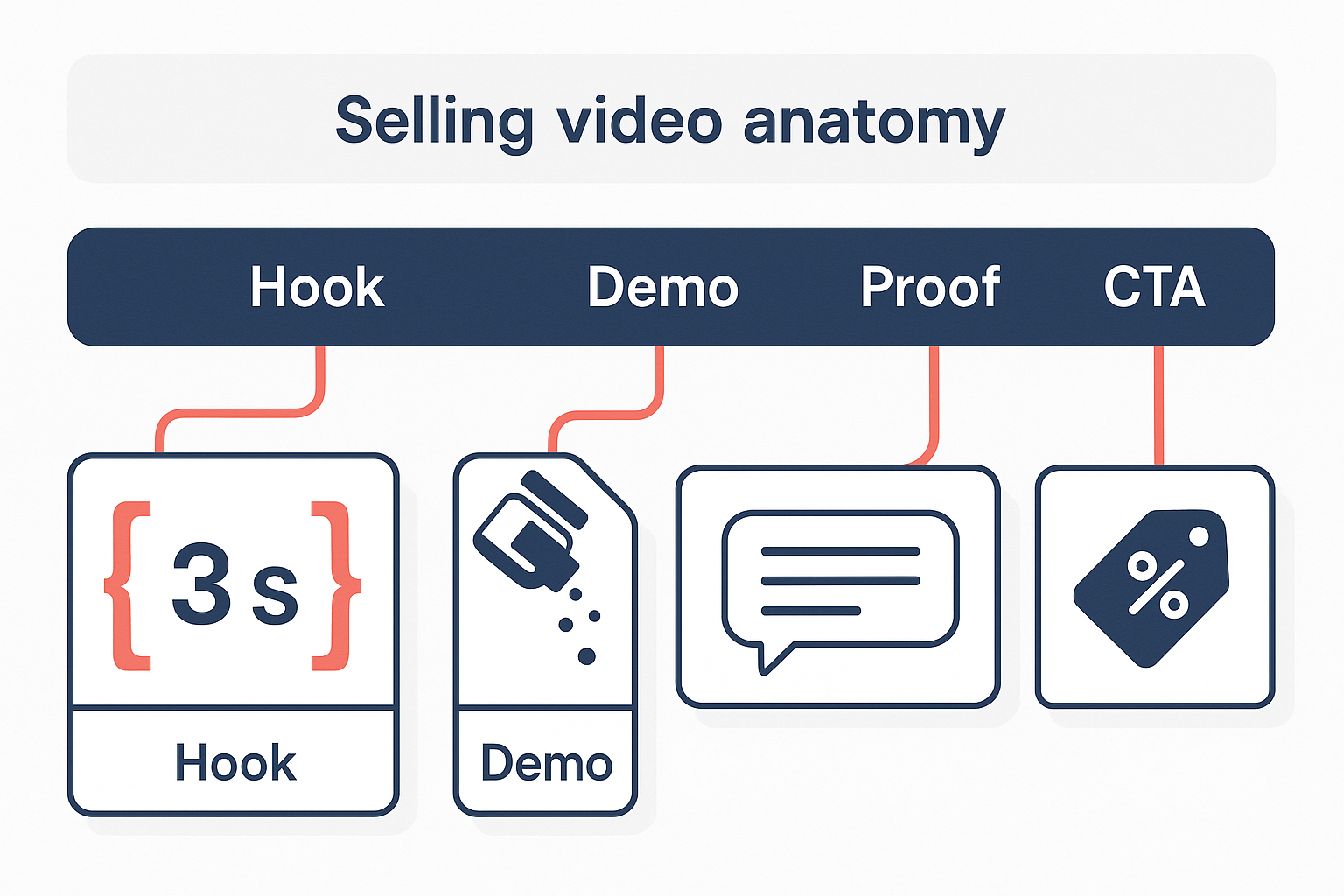
Every high-converting selling video runs the same four moves. Hook in the first three seconds or the scroll continues. Demo the real product: open the tub, show the scoop, mix the greens. Prove it with a lab result or a customer review, not a hype claim. Close with an explicit CTA to the product tag. Four moves, one objective.
The Compliance Guardrail
Compliance is part of the anatomy, not an afterthought. Claims in the video must stay in structure-function language: “supports,” “maintains,” “aids.” A Certificate of Analysis on every batch is stronger social proof than a superlative, and it keeps claims defensible when a video gets scrutiny.
This is the same economics pushing why influencers are launching owned supplement brands: the algorithm rewards sellers over pure entertainers. The zero-CAC creator brand success rates show why an audience you already own converts better than any paid acquisition.
The Five TikTok Shop Metrics That Tell You If a Video Is Selling
A viral view count is not a sales report. TikTok Shop gives you the real signal through five metrics, and each one points at a different stage between discovery and a repeat customer. Read them as a stack, not as single numbers. One strong number can hide four weak ones.
- Views and engaged views (6-second threshold). Reach and early attention. Top of the funnel, nothing more.
- Product-tag click-through rate. Discovery to intent. Viewers saw the tag and tapped it.
- Add-to-cart rate. Offer strength. The product page closed the pitch or lost it.
- Order conversion rate. Checkout friction. Carts die here, usually at shipping or payment.
- 60-day repeat purchase rate. Brand health. Supplements are a repeat business; one-off sales barely move the model.
| Metric | What it measures | Working benchmark | Lookback |
|---|---|---|---|
| Views and engaged views (6-second threshold) | Reach and early attention | n/a | n/a |
| Product-tag click-through rate | Discovery to intent | n/a | n/a |
| Add-to-cart rate | Offer strength | n/a | n/a |
| Order conversion rate | Checkout friction | n/a | n/a |
| 60-day repeat purchase rate | Brand health; compounds | Top-quartile sellers: 35% to 45% (Dataslayer, June 29, 2026) | Audit on 28-day windows monthly |
Attribution: two windows, one habit
Run daily optimization on 7-day click and 1-day view windows. Audit monthly on 28-day windows (Dataslayer, June 29, 2026). The short windows catch what changed yesterday; the long window reveals what actually compounds. A video that sells on day one and dies by day seven is a promotion, not a brand asset.
One metric outranks all five for a zero-inventory brand: net per order. A video can pull 100,000 views and still lose money on every order if product cost, fulfillment, and platform fees eat the margin. Run that math per sale with the supplement margin calculator before you scale anything. Most creators scale by views; the ones who stay in business scale by net per order.
Why Zero-Inventory White Labeling Fits the Video-to-Sale Model
TikTok Shop rewards volume and consistency. The algorithm pushes accounts that post often, test constantly, and convert in real time. That cadence is brutal if every post risks a warehouse full of unsold product. Publish a dud and you eat the cost. Publish a hit and you might not have stock.
Zero-inventory white labeling removes both problems. A creator can publish freely because every order is fulfilled on demand. No pallets. No minimums. No guesswork about what will hit. A viral video can drop a thousand orders in hours, and the fulfillment side flexes to match. The inventory never sits on your balance sheet.
That is the core fit. Video drives spikes, TikTok compresses the decision window, and how Rocktomic on-demand fulfillment works turns each sale into a single packed, labeled, shipped order. The creator owns the brand, the customer data, and the relationship. Rocktomic handles manufacturing, warehousing, labeling, and drop-shipping.
The economics support experimentation. The Free plan costs $0 per month, with no minimum order quantity. You pay a flat about $2 per item fulfillment fee only when an order ships. If a video flops, you owe nothing. If it pops, every unit still gets fulfilled on time.
Compare that to platforms that force pallet buys before a brand has proven demand, or that charge per-order fees on top of inventory costs. Those models punish the exact behavior TikTok rewards: posting early, testing often, iterating fast.
For creators who outgrow the entry tier, Rocktomic membership pricing scales cleanly. The Scale plan at $297 per month adds the full 140+ product catalog, unlimited sales channels, and the lowest per-unit wholesale pricing. Same on-demand fulfillment, better unit economics. Your content strategy does not change when you upgrade; the ceiling just gets higher.
The model matches the medium. TikTok is built for unpredictable demand, and Rocktomic’s white label supplement program for creators lets you ride that unpredictability without carrying the cost of it. Publish first. Prove demand. Scale what works.
TikTok Shop Supplement Conversion Rate FAQs
Here are the answers to the most common TikTok Shop supplement conversion questions.
What is a good TikTok Shop conversion rate for supplements?
On TikTok Shop, platform-wide session conversion benchmarks sit between 3.2% and 4.7%, while a good in-app checkout rate is often cited at 5% to 8% (Dashboardly, June 19, 2026). Supplements are a considered purchase, so creators should benchmark against their own 30-day data before comparing to beauty or impulse categories. A rate below 2% usually signals a leak in the product page or offer, not necessarily a problem with the video.
How many TikTok views does it take to make a supplement sale?
There is no fixed view-to-sale ratio. Creator-reported panels commonly treat about 1 sale per 5,000 views as a reasonable organic baseline for shoppable videos. Paid traffic converts differently: conversion-optimized TikTok ads to an external site average near 1.92%, while native in-app checkout converts several times higher (Lebesgue, March 9, 2026). The more useful number is click-to-order rate per video, which isolates offer quality from raw reach.
Do TikTok Shop Live streams convert better than short videos?
Yes. Live shopping sessions convert at roughly 5% to 12%, well above standard shoppable video, which benchmarks around 2% to 8% (Dashboardly, June 19, 2026). Video still contributes about half of US TikTok Shop GMV, so live is a complement, not a replacement (Momentum Works, February 11, 2026). A portfolio that tests both formats beats betting on one.
Which TikTok Shop metrics should supplement creators track?
Track views, product-tag click-through rate, add-to-cart, order rate, and the 60-day repeat purchase rate. The 60-day repeat purchase rate is the strongest brand-health signal because it compounds, while viral view spikes do not (Dataslayer, June 29, 2026). Use 7-day click and 1-day view attribution windows for daily decisions, and audit performance on 28-day windows monthly.
Are supplements allowed on TikTok Shop?
Yes. TikTok Shop allows supplement products under its health and wellness category rules, which typically require seller registration, documentation, and compliance with advertising claim rules. Creators should publish only structure-function language and keep third-party lab results and Certificates of Analysis available as proof of quality. Clean compliance protects the account from takedowns and builds buyer trust at checkout.
Can you sell supplements on TikTok Shop without holding inventory?
Yes. A zero-inventory white-label model lets creators list products on TikTok Shop while a manufacturer warehouses, labels, and drop-ships each order. Rocktomic’s Free plan costs $0 per month and charges only a flat fee of about $2 per item when an order ships. That removes the pallet-buy risk that forces many competitors to stock thousands of units before their first video converts.
How do TikTok Shop fees affect supplement margins?
TikTok Shop takes referral and processing fees on each order, and creator-affiliate commissions add another layer, so the all-in take can reach roughly 30% of selling price before product costs. Brands need healthy gross margins to absorb that. Rocktomic’s Scale plan at $297 per month unlocks the lowest per-unit wholesale pricing across the full 140+ product catalog, which is where a fee-heavy channel becomes profitable.
How fast can a supplement creator launch on TikTok Shop?
With a zero-inventory partner, a creator can move from approval to live listings in days rather than months, and the Free plan starts at $0 per month. Optional done-for-you packages, such as a $497 starter branding bundle, speed up the professional look. The Scale plan at $297 per month adds unlimited sales channels and the full catalog when the brand is ready to scale past the first 10 products.
The Bottom Line: Own the Brand Behind the Video
Video is TikTok Shop’s biggest sales channel. Supplements convert as a considered purchase, so buyers watch, compare, and decide before they pay. The person who owns the brand behind the video keeps the margin and the customer relationship. That is where the business lives. A viral clip is only the start; the brand holds the value after the view fades.
The videos you already make can become a product line. Run the numbers in the supplement margin calculator, then start on the Scale plan via Rocktomic membership pricing. Or book a call with Rocktomic for a guided walkthrough of the TikTok Shop setup. The Free plan costs $0 per month. The Scale plan costs $297 per month. Pick the plan that fits where you are today.
Own your brand. Zero inventory. $0/month entry. US GMP quality with a COA on every batch.
Last updated: July 21, 2026.